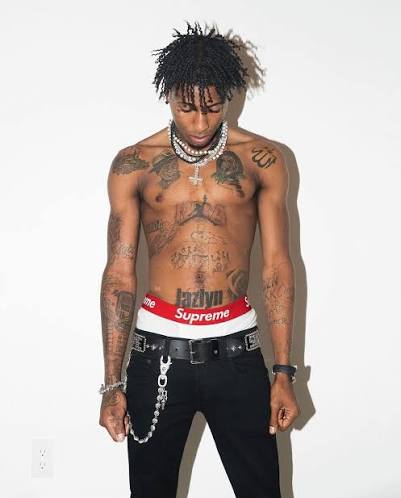
Banned, Blocked, and Still Winning: NBA YoungBoy Built a $30M Independent Empire By Refusing to Play Anyone's Game
Tasha Monroe
July 9, 2026 · 8 min read
YouTube suppressed him. Radio playlists ignored him. Social platforms restricted him. And yet NBA YoungBoy remains one of the most-streamed artists in America — proof that a direct audience relationship beats every gatekeeper the industry throws at you.
Kentrell DeSean Gaulden — NBA YoungBoy — has been banned from more platforms than most artists have appeared on. His videos have been age-restricted, demonetized, and removed. His name has been excluded from playlists. The radio industry has treated him like he doesn't exist.
His fans don't seem to have gotten the memo.
In 2026, NBA YoungBoy's independent music operation generates an estimated $30 million annually — through a combination of streaming royalties, merchandise, and direct-to-fan sales that bypass every gatekeeper the industry has deployed against him. He is consistently one of the most-listened-to artists in America despite receiving the least institutional support of any artist at his commercial level.
The story of how that happens is a masterclass in the power of direct audience loyalty. And it is a blueprint that every creator in the culture needs to understand.
The Suppression That Couldn't Suppress
In 2021, NBA YoungBoy's YouTube channel was suspended, then reinstated, then age-restricted — limiting its algorithmic reach to a fraction of what an unrestricted channel would receive. The music press covered the restriction as a commercial death sentence.
Within weeks of the restriction, YoungBoy was still generating hundreds of millions of streams.
His audience did not discover him through YouTube recommendations or radio programming. They discovered him through the kind of organic, community-driven word-of-mouth that no platform algorithm can manufacture or kill. Baton Rouge. The culture. The streets. People who heard something real in his music and shared it because it meant something.
That relationship — built person to person, block to block, phone to phone — is immune to platform restrictions in a way that artist-brand-deal-dependent careers simply aren't.
The Independent Model at $30M
NBA YoungBoy's revenue structure is instructive precisely because it does not depend on institutional cooperation.
Streaming royalties from Spotify, Apple Music, and other DSPs flow regardless of radio support or playlist placement. His catalog — which includes dozens of projects released at a pace that industry analysts consistently underestimate — generates compounding royalty revenue that does not require any single platform's cooperation to function.
Merchandise sales, managed directly through his operation, capture value from a fanbase that expresses loyalty through purchases as much as through streams.
The $30 million figure is an estimate precisely because YoungBoy's operation is structured to be opaque to external observers — which is itself a business decision. He does not need institutional validation to generate institutional numbers.
What Baton Rouge Built
Baton Rouge has never been at the center of hip-hop's commercial map. The city produces talent — Boosie Badazz, Kevin Gates, Webbie, a lineage of artists whose influence extends far beyond their market recognition — but the infrastructure, the investment, and the industry attention has historically flowed elsewhere.
NBA YoungBoy is the latest expression of a city that builds greatness without waiting for permission.
His prolific output — the pace at which he releases music, the volume of catalog he has built while still in his mid-twenties — is rooted in a Baton Rouge mentality that does not pause to wait for institutional approval before putting work into the world. You create. You release. You let the audience decide.
The audience has consistently decided in his favor.
The Blueprint for Creators Who Don't Fit the Mold
The NBA YoungBoy business story is important specifically because it demonstrates something that the culture economy needs to hear: the gatekeepers do not determine your ceiling.
Playlists, radio support, brand deals, platform recommendations — all of it creates leverage that makes a career easier to build. None of it is the career itself. The career is the relationship between the creator and the audience. Everything else is infrastructure.
YoungBoy's audience found him in spite of every structural barrier the industry constructed. That audience is now generating $30 million in annual revenue — and it has not been touched by the gatekeepers that were supposed to determine his fate.
That is a direct audience relationship operating at full power.
Build yours before you need it.
Move accordingly.
Did you enjoy this article?
Written by
Tasha Monroe
Staff writer at The Hood Forbes Magazine covering business, wealth, and culture.