How Dr. Dre Became a Billionaire Without Releasing a New Album

Andre Thompson
July 23, 2026 · 8 min read
While the streets were waiting on Detox, Dre was building something worth more than any record. In March 2026, Forbes made it official: the Compton architect is a billionaire — and the blueprint he used is the most important business story in hip-hop history.
The first thing you need to understand about Dr. Dre's billion-dollar status is that it has almost nothing to do with music.
It has everything to do with ownership.
In March 2026, Forbes placed André Young — Dr. Dre — on the World's Billionaires list with a confirmed net worth of $1 billion, making him hip-hop's second billionaire behind Jay-Z and only the sixth musician in the world to cross the ten-figure threshold. The list includes Beyoncé, Rihanna, Taylor Swift, and Bruce Springsteen. Dre is in that company now. The kid from Compton is on the Forbes Billionaires list.
But the story of how he got there is not a rap story. It is a business story. And it starts with a product launch in 2008.
Beats Electronics: The $3 Billion Move
When Dr. Dre and Interscope executive Jimmy Iovine co-founded Beats Electronics in 2008, the consumer audio market was dominated by legacy brands selling cheap products at high markups. Beats changed the equation — not just by improving sound quality, but by repositioning headphones as a cultural status symbol. Every artist, athlete, and tastemaker was wearing them. The product had cultural gravity before it had mass distribution.
Within five years, Beats by Dre controlled over 60% of the premium headphone market in America. The revenues were extraordinary. The brand was untouchable.
Then Apple called.
In 2014, Apple acquired Beats Electronics for $3 billion — the largest acquisition in the company's history at that point. Dre and Iovine each held roughly 25% stakes. Their respective payouts cleared approximately $750 million each. In a single transaction, Dre became the most financially powerful figure in hip-hop history — before Jay-Z had even crossed the billion threshold himself.
When the deal closed, Dre filmed a video celebrating becoming "the first billionaire in hip-hop history." He wasn't quite there yet — Jay-Z would claim that title officially — but the statement revealed something important: Dre always knew this moment was coming. He had been building toward it for decades.
Aftermath Entertainment and the Catalog Play
A $750 million payout is not a billion. The gap was closed through compounding.
Dre retained Aftermath Entertainment, his Interscope joint venture that has released music from Kendrick Lamar, Eminem, Anderson .Paak, and 50 Cent. Aftermath is not just a record label — it is a content business with catalog value that appreciates with every passing year and every new streaming platform that licenses back catalog. Dre owns masters, publishing interests, and shares in some of the most-streamed catalog in hip-hop history.
Eminem's back catalog alone streams over 50 million times per month globally. Kendrick Lamar's "To Pimp a Butterfly" and "DAMN." continue to generate royalty income years after release. This is not passive income in the loose sense — this is engineered recurring revenue.
On top of that, Dre launched Still G.I.N., a premium gin brand that entered the celebrity spirits market with the kind of cultural authority that most celebrity alcohol brands have to manufacture artificially. It distributes nationally and has expanded steadily since its 2023 launch.
The Hollywood Walk of Fame and the Grammy Stage
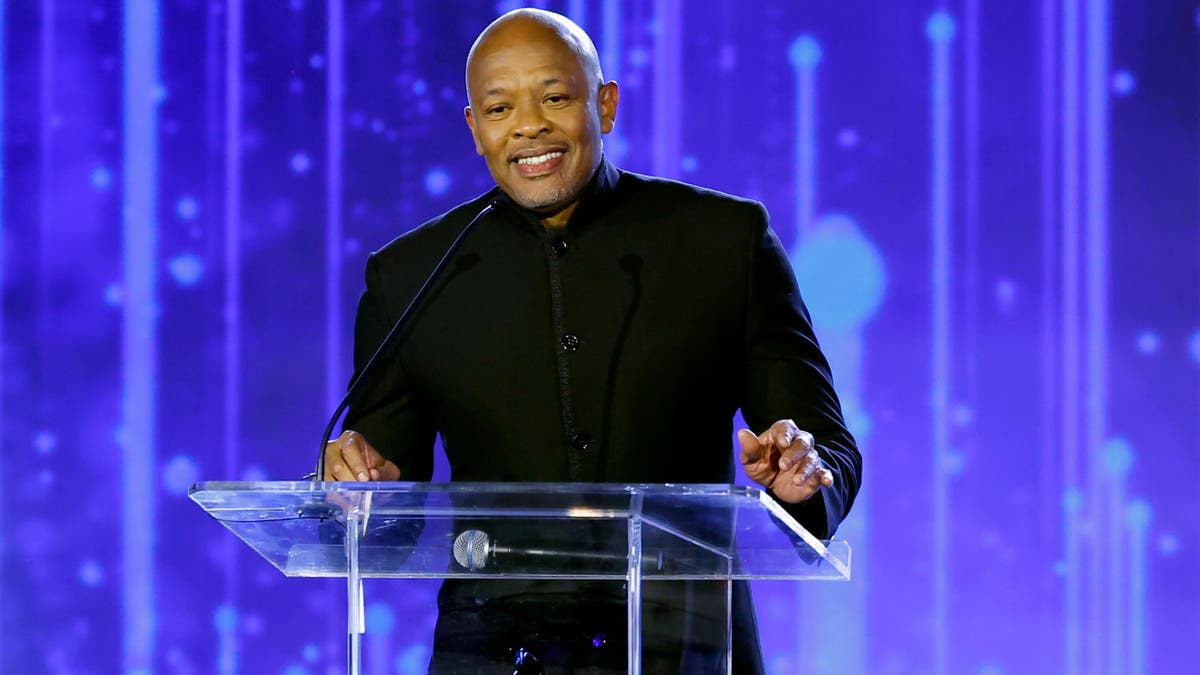
In March 2024, Dre received his star on the Hollywood Walk of Fame. In January 2026, he stood onstage at the Grammy Awards as the recipient of the Recording Academy's Black Music Collective honor — recognition for his structural contribution to the industry, not just his discography.
Both moments were extensions of the same story: a man who was born in Compton, made music that defined a generation, watched the industry try to take everything from him at Death Row Records, and then spent 30 years methodically building structures that nobody could take.
At 61 years old, Dr. Dre does not need to release another album. The empire is already running.
Blueprint Takeaway
1. Own the exit before you build the product. Dre structured Beats for acquisition from day one — Iovine's industry relationships and Dre's cultural weight were both necessary components of the Apple deal. Know what your end goal is before you start building.
2. Catalog is forever cash. Aftermath's music catalog earns royalties on every stream, every license, every sync deal. Legacy artists who own their masters never stop getting paid. The catalog is the annuity.
3. Cultural cachet is convertible. Apple did not pay $3 billion for headphones. They paid for the name, the brand, and the cultural gravity Dre had built over 20 years. Your brand IS the asset — protect it accordingly.
4. Never build someone else's empire twice. Dre lost everything at Death Row. That loss became the education. Every decision he made for the next 30 years was architected to ensure he would never be in that position again. The lesson from the L is what built the W.
Did you enjoy this article?
Written by
Andre Thompson
Staff writer at The Hood Forbes Magazine covering business, wealth, and culture.