Fashion Killa: How A$AP Rocky Turned AWGE Into One of Hip-Hop's Most Serious Creative Empires

Andre Thompson
July 21, 2026 · 9 min read
He used to get clowned for wearing 'weird clothes' in Harlem. Now he's headlining New York Fashion Week with his own runway show, collaborating with Puma on a full collection, designing jewelry lines, consulting for Chanel, and running a creative agency that controls his every output. A$AP Rocky didn't follow the culture. He built it.
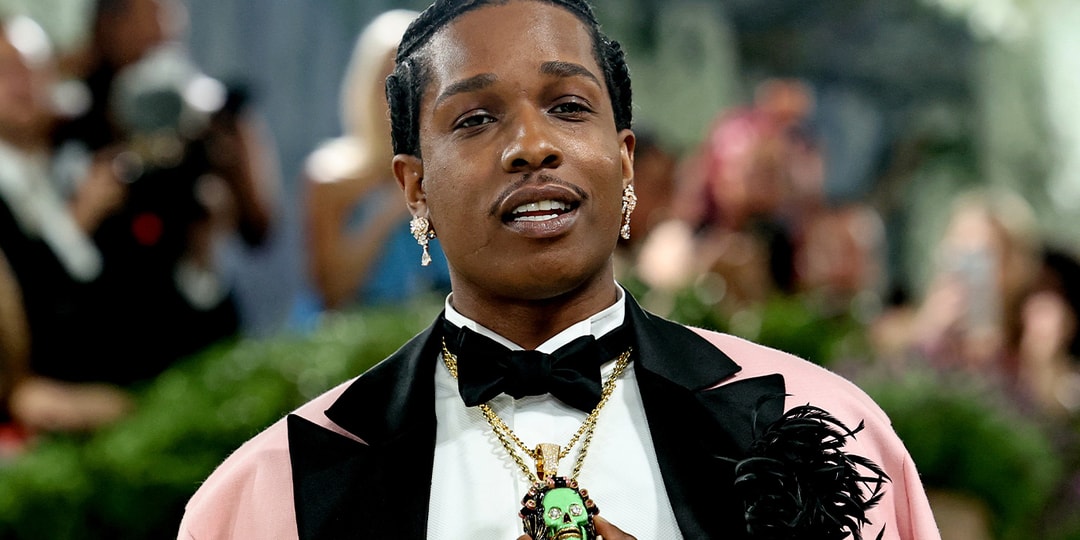
There's a version of this story that starts at NYFW. A$AP Rocky, center stage at his AWGE Fall/Winter 2026 runway show in downtown Manhattan on February 13, 2026 — the city he grew up in finally hosting the brand he's been building for over a decade. Critics called it "AWGE 2.0." The New York Times called it "one of the most anticipated runway moments of the season."
But the real story starts earlier. Much earlier.
It starts on 125th Street in Harlem, where Rakim Mayers grew up in a housing project and started dressing in a way that turned heads for all the wrong reasons. Where the neighborhood questioned his choices. Where the kid who would later be called "Fashion Killa" was just a kid who knew what he liked and refused to apologize for it.
That refusal — to apologize, to conform, to wait for permission — is the business model.
AWGE: The Creative Agency Behind Everything
AWGE is not a clothing brand. That's the first thing you need to understand about what Rocky built.
AWGE is a full-service creative agency and collective. Founded in the early 2010s, it operates as the umbrella entity for every creative output in the A$AP Rocky universe — music videos, fashion collections, brand collaborations, creative direction for other artists, live experiences. The brand produces the vision and sources the execution.
Think of it like a Black-owned version of what Virgil Abloh's Off-White became, but built from the street level up rather than from the fashion academy down. AWGE is the architecture. Everything else is an expression of it.
In 2024, AWGE debuted its first full apparel runway collection at Paris Fashion Week — a moment that signaled the brand's transition from industry insider project to legitimate fashion house. The collection sold out. The critical reception was serious. The industry took notice.
In 2026, AWGE brought it home: the Fall/Winter 2026 show in New York, on Rocky's own turf, in front of a crowd that included some of the most powerful names in fashion. The collection drew comparisons to the early work of Helmut Lang and Raf Simons while maintaining the specific Harlem cultural DNA that no European house could replicate.
The Puma Partnership: Scale Without Compromise
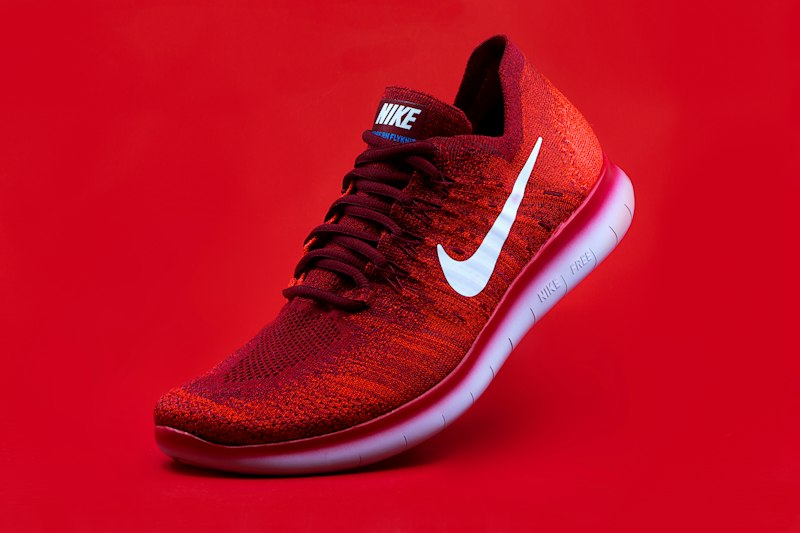
In 2023, A$AP Rocky signed a major partnership with Puma — a multi-year creative collaboration that gives him creative co-design authority over a line of footwear and apparel that distributes at Puma's global scale.
The deal is structured similarly to Kanye's Yeezy arrangement at adidas — meaningful creative control, equity participation, and products that reach consumers at a price point broader than the luxury tier where AWGE typically operates. It is a masterclass in market segmentation: the AWGE flagship for the fashion world, the Puma line for the mass consumer market.
The first Puma collection dropped to strong commercial performance. The brand collaboration continued through the FW26 season, with new PUMA x AWGE releases announced alongside the NYFW show.
Pave Niteo: The Jewelry Empire
In 2026, Rocky announced Pave Niteo — a high jewelry brand that operates at the luxury end of the accessories market. The launch represented a significant expansion into a category that generates enormous margins for brands that establish themselves.
Rocky's entry into jewelry is not arbitrary. He has been one of hip-hop's most photographed accessory stylists for over a decade — the Chanel pearls, the custom chains, the statement pieces that generate as much attention as the music. Pave Niteo takes that cultural authority and turns it into a business.
The brand's positioning — handcrafted, limited edition, positioned above fashion jewelry and competing with established fine jewelry houses — is a direct application of the lesson luxury learned from streetwear: cultural credibility creates premium pricing power.
HOMMEMADE: The High-Fashion Crossover
Rocky's consulting and creative partnership with HOMMEMADE, a luxury ready-to-wear brand, represents his deepest integration into the institutional fashion world. The collaboration blurs the line between AWGE's independent creative identity and the legacy fashion houses that dominate Paris and Milan.
The relationship with Chanel has been publicly reported across multiple seasons. Rocky's presence in Chanel campaigns and his friendship with Karl Lagerfeld's successors at the house places him in a category no hip-hop artist occupied before Pharrell Williams took the Louis Vuitton menswear director seat — but Rocky's path is deliberately independent, advisory rather than institutional.
Dom Pérignon and the Luxury Lifestyle Portfolio
A$AP Rocky's partnership with Dom Pérignon — a long-running relationship with one of the most prestigious Champagne houses in the world — establishes his brand presence in the luxury spirits and hospitality ecosystem.
The Dom Pérignon relationship is not a standard celebrity endorsement. It functions as a creative partnership, with Rocky contributing to the visual and cultural positioning of campaigns. It is the kind of arrangement reserved for figures who bring something to the brand that money alone cannot purchase: cultural legitimacy in the rooms that matter.
The Rakim Mayers Blueprint
A$AP Rocky's business empire is built on a single principle that he has never deviated from: creative control is the asset.
He has walked away from deals that didn't give him creative authority. He has taken smaller upfront numbers in exchange for equity and directorial input. He built AWGE as an independent agency specifically so that every brand partnership runs through a structure he controls — not one he works for.
From Harlem to Paris to NYFW, the Fashion Killa has been telling the same story for twenty years. The hood built someone who saw the world differently. And instead of changing his vision to fit the room, he rebuilt the room around his vision.
Blueprint Takeaway
1. Creative control is equity. A$AP Rocky consistently traded short-term dollars for long-term directorial authority. AWGE exists because he refused to let brands use his image without giving him a say in how it was used. Your creative vision is a negotiating asset, not a concession.
2. Build the vehicle before you need it. AWGE was a creative collective years before it was a fashion brand. The infrastructure existed — the team, the aesthetic language, the cultural credibility — so when the market was ready for AWGE runway shows, the brand was already built.
3. Segment deliberately. AWGE for the fashion week crowd, Puma for mass market, Pave Niteo for luxury accessories, Dom Pérignon for lifestyle. Rocky built different price tiers that serve different consumer audiences without diluting the core identity. That is brand architecture, not brand confusion.
4. Let your origin story be your differentiator. No European fashion house can replicate what AWGE represents. Rocky's Harlem upbringing, his relationship to hip-hop culture, his specific aesthetic sensibility — these are not backstory. They are competitive moats that nobody else can build, because nobody else lived that life.
From Harlem to the runways of Paris and New York: the Fashion Killa built an empire out of refusing to change.
Did you enjoy this article?
Written by
Andre Thompson
Staff writer at The Hood Forbes Magazine covering business, wealth, and culture.