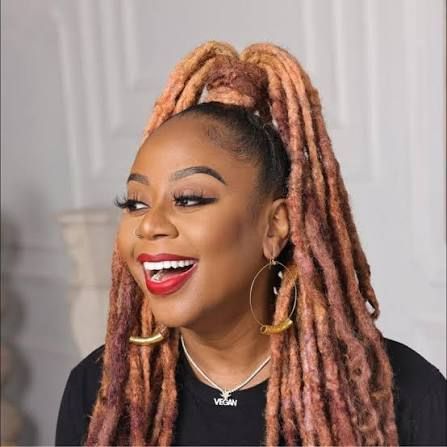
Pinky Cole Lost Everything in a Fire. Then She Built a $25 Million Vegan Empire From a Parking Lot in Atlanta
Brianna Wells
July 7, 2026 · 9 min read
In 2016, her Harlem restaurant burned down and she was left with nothing. Two years later, Slutty Vegan launched from a pop-up in Atlanta with a line down the block. The Pinky Cole story is what rebuilding actually looks like.
Aisha 'Pinky' Cole was not born into the restaurant industry. She was born into Baltimore, Maryland — a city with deep poverty, fierce pride, and a community that teaches its children early that nobody is coming to save you.
She moved to New York, built a restaurant in Harlem, and watched it burn down in 2016. A kitchen fire destroyed the business she had worked to build. She lost everything — the equipment, the inventory, the revenue stream, and for a moment, the belief that she was supposed to be doing this at all.
In 2018, she drove to Atlanta and launched Slutty Vegan from a pop-up setup in a parking lot. People waited in line for hours on day one.
By 2021, she had raised $25 million, expanded to multiple states, and become one of the most talked-about restaurant founders in America. This is what it actually looks like to rebuild.
Baltimore to the Bronx: Building Before the Fire
Pinky Cole's entrepreneurial instinct was not born from a business school program or a startup accelerator. It was born from watching the world around her operate on scarcity and deciding she was going to create abundance instead.
After leaving Baltimore, she built her way into the entertainment and hospitality world in New York — managing talent, working in production, and eventually opening a restaurant in Harlem. The business was growing. The concept was working. And then the fire took it.
The period after the fire is worth sitting with, because it defines who Pinky Cole is as an entrepreneur. She did not retreat. She regrouped.
"I lost everything," she has said in interviews. "But I realized I had never lost the skill. I had never lost the vision. The building burned down. The business idea was still mine."
That distinction — between the physical infrastructure of a business and the intellectual and relational capital of the founder — is one that most people in her position never make. She made it and it saved her.
Slutty Vegan: The Concept That Changed Everything
Pinky Cole moved to Atlanta in 2018 with a vision: a plant-based burger concept designed not for wellness influencers but for Black communities who had been told, explicitly and implicitly, that healthy food was not for them.
The name Slutty Vegan was intentional provocation — a way to signal that this was not your grandmother's health food, that this was loud and fun and for the culture. The menu items had names like "One Night Stand," "The Ménage À Trois," and "Fussy Hussy." The branding was unapologetically bold.
What she created was a vegan experience that did not make veganism feel like sacrifice. It felt like celebration. And the community responded immediately.
On day one of the Atlanta pop-up, people waited over an hour. The lines grew longer as word spread. Before Pinky had a permanent brick-and-mortar location, Slutty Vegan had built a cult following — driven entirely by social media, word of mouth, and the quality of the product itself.
The $25 Million Raise
In 2021, Slutty Vegan raised $25 million in a funding round that included a coalition of investors aligned with the brand's community focus. The raise came after Slutty Vegan had already demonstrated that the concept scaled — with multiple Atlanta locations and a waitlist of markets begging for expansion.
The capital allowed for geographic expansion, operational infrastructure, and the kind of team-building that turns a founder's vision into an institution. By 2022, Slutty Vegan had locations across multiple states and was on track to become one of the fastest-growing restaurant concepts in America.
Pinky Cole used the funding not just to build restaurants but to build community. Free meals for families in need. Financial support for people returning from incarceration who needed bond money — a use of resources that is extraordinarily rare in the restaurant industry and says everything about who she is building this for.
The Pivot: Building for Longevity, Not Just Heat
In 2023 and 2024, Slutty Vegan made a set of decisions that drew significant media attention: closing some locations as part of a strategic restructuring and recalibration. The business press covered it as struggle. Pinky Cole covered it as strategy.
"Every great business has moments where it pauses, reassesses, and rebuilds for the next phase," she said. "We're not closing. We're making sure what we reopen is right."
For Hood Forbes, this is perhaps the most important chapter in the Slutty Vegan story — not because it was comfortable, but because it was honest. Building a business is not a linear upward trajectory. It is a series of decisions made in real conditions, and the willingness to restructure before a crisis, rather than during one, is a discipline that separates founders who build institutions from those who ride trends until they don't.
The Philanthropy Is the Brand
One of Pinky Cole's most distinctive qualities as a business leader is the integration of community investment into the core of the Slutty Vegan brand — not as a marketing add-on but as an operating principle.
She has used the restaurant's platform to pay bond money for community members who cannot afford it. She has hosted free meal events in neighborhoods where food access is limited. She has spoken openly and without filter about the economic conditions that create food deserts in Black communities — and positioned Slutty Vegan as a business model that refuses to replicate those conditions.
"I'm not building this for me," she has said. "I grew up watching communities eat the worst food because it was the cheapest food. I wanted to build something that proved good food could be accessible and could still be Black."
The Blueprint
Pinky Cole lost a restaurant to a fire and built a $25 million company two years later. The variables between those two points are: a clear concept, a community-first approach, the willingness to be bold in branding, the discipline to rebuild rather than abandon, and the understanding that the business you are building is bigger than you.
From Baltimore. From a fire in Harlem. From a parking lot in Atlanta.
The line down the block was there from day one. Because when you build something real — for the people who are really hungry — they come.
Did you enjoy this article?
Written by
Brianna Wells
Staff writer at The Hood Forbes Magazine covering business, wealth, and culture.