How 50 Cent Turned Rap's Most Unlikely Second Act Into a $400M Television Empire

Marcus Webb
July 20, 2026 · 9 min read
He went bankrupt in 2015. By 2025, he had signed a $124M entertainment venue deal, locked a 985,000 square-foot studio, and was running one of the most prolific TV production operations in the game. Curtis Jackson doesn't lose — he pivots.
The internet loves to clown 50 Cent. The trolling. The Instagram shade. The bankruptcy filing that everyone thought meant the end of G-Unit. While the world was watching the memes, a quiet empire was being assembled one deal at a time.
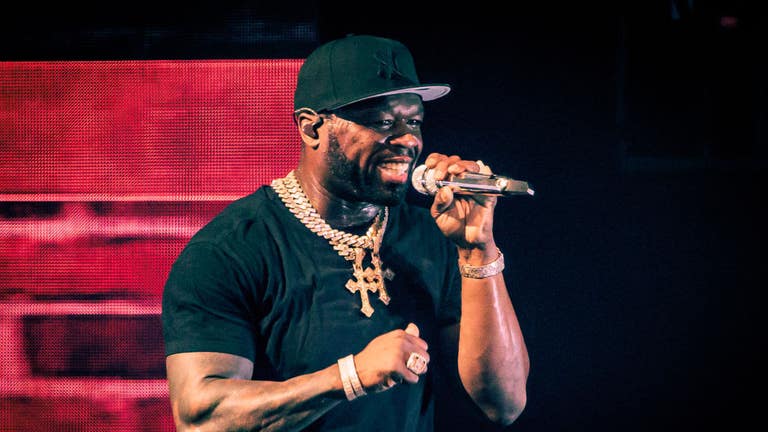
Curtis James Jackson III — 50 Cent — is proof that the most dangerous version of a hustler is the one everybody counts out. He came up from Southside Jamaica, Queens, survived ten bullets at point-blank range, sold Vitaminwater for a $100 million payday, and then, just when critics thought he was coasting on legacy, built one of the most prolific television production companies Black entertainment has ever seen.
The blueprint is not about music. It never was.
The Power Universe Changed Everything
In 2014, 50 Cent partnered with Starz to executive produce "Power" — a series about a New York drug lord turned nightclub owner navigating the overlap between the street life and legitimate business. The show became one of Starz's biggest hits, running six seasons and averaging over 8 million viewers per episode at its peak.
But 50 didn't just collect an executive producer check and move on. He studied the machine.
By the time "Power" ended in 2020, he had already engineered four spinoffs: "Power Book II: Ghost," "Power Book III: Raising Kanan," "Power Book IV: Force," and the documentary series "Hip Hop Homicides." Each spinoff extended the universe, retained audiences, and generated fresh licensing revenue — a content strategy that the major studios only recently understood but 50 Cent was executing half a decade ago.
Then came BMF.
BMF: Turning Culture Into Catalogue
"BMF" — based on the real story of the Black Mafia Family, Demetrius "Big Meech" Flenory and Terry "Southwest T" Flenory — premiered on Starz in 2021 and became a cultural phenomenon. The show ran immediately alongside the Power universe, giving 50 Cent two franchise properties generating simultaneous Starz subscription revenue.
This is not a coincidence. This is a calculated content strategy: own multiple franchise IP positions within the same distribution relationship, so that when one show's season ends, another begins. The subscriber stays. The revenue continues.
The G-Unit Film & Television empire currently has 40+ projects in development or production across Starz, Fox Entertainment, and other networks. In January 2024, he sold yet another show and celebrated with a cigar on a balcony. "I sold another show yesterday," he posted. "I'm really enjoying television production."
The $124 Million Infrastructure Move
In April 2023, 50 Cent purchased a 985,000 square-foot facility in Connecticut to house G-Unit Films and Television. Let that land: almost one million square feet of production infrastructure, owned outright.
That same year, he finalized a 30-year operating deal with Millennium Studios in Shreveport, Louisiana — locking in two decades of production capacity in a market actively courting film and television with competitive tax incentives. The Shreveport city council called it a rebranding of their entertainment economy. For 50 Cent, it was just a real estate play that happened to come with a studio.
By 2025, he had added a $124 million deal to build three new entertainment venues, expanding the portfolio beyond production into live experiences. The empire now spans content creation, distribution relationships, physical infrastructure, and event venues.
The G-Unity Foundation: Building the Pipeline
The part of 50 Cent's empire that gets the least coverage is the part that matters most long-term: the G-Unity Foundation and its G-Unity Business Lab.
The Business Lab runs the Hustle Tank — a live entrepreneurship pitch competition hosted at major venues like NRG Arena in Houston. The model is simple: select three entrepreneurs from underserved communities, put them in front of a live audience, give them access to capital, mentorship, and network.
The Hustle Tank is not charity. It is infrastructure — the same infrastructure that 50 Cent never had access to when he was coming up in Jamaica, Queens. Building it now is how you change the trajectory for the next generation of hustlers who are smarter than anyone expects.
The Sire Spirits Chapter
The Vitaminwater sale in 2007 was the move that put 50 Cent in a different conversation — $100 million in exchange for his equity stake in the brand after Coca-Cola acquired it. He didn't spend it. He planted it.
His spirits portfolio — built under Sire Spirits — includes Branson Cognac, a collaboration with master blender Luc Belaire. The brand used the same marketing blueprint as his music career: controversy, culture, and community. It worked.
The spirits plays are not his biggest business, but they demonstrate the consistent pattern: identify a market where brand authority matters more than product superiority, position himself as the cultural bridge that mass-market brands cannot replicate, and collect recurring revenue.
Blueprint Takeaway
1. Bankruptcy is a legal tool, not a career ending. 50 Cent filed for Chapter 11 while still collecting income and protecting key assets. Learn the difference between financial strategy and financial failure.
2. Own the IP, not just the check. Executive producing "Power" was not about a one-time payday. It was about owning a universe that generates spinoffs, merchandise, licensing, and syndication revenue for decades.
3. Infrastructure is the real moat. A studio facility, a 30-year operating lease, a $124M venue deal — these are not vanity projects. They are barriers to entry that protect the production business from being displaced.
4. The trolling is the marketing. While everyone is distracted by the Instagram posts and the shade, the paperwork is getting signed. 50 Cent has understood for twenty years that attention — any kind of attention — is convertible to business. Stay focused on the ledger, not the timeline.
The bankruptcy chapter lasted two years. The empire chapter is still being written.
Did you enjoy this article?
Written by
Marcus Webb
Staff writer at The Hood Forbes Magazine covering business, wealth, and culture.